To stay competitive, organizations invest heavily in Agile and digital transformations. But scaling Agile across the enterprise is not just about having Agile teams—it’s about aligning strategy with execution and ensuring that every investment delivers measurable value. This is where Lean Portfolio Management (LPM) comes in.

.png)
In today’s fast-changing world, customer expectations evolve at lightning speed. To stay competitive, organizations invest heavily in Agile and digital transformations. But scaling Agile across the enterprise is not just about having Agile teams—it’s about aligning strategy with execution and ensuring that every investment delivers measurable value.
This is where Lean Portfolio Management (LPM) comes in.
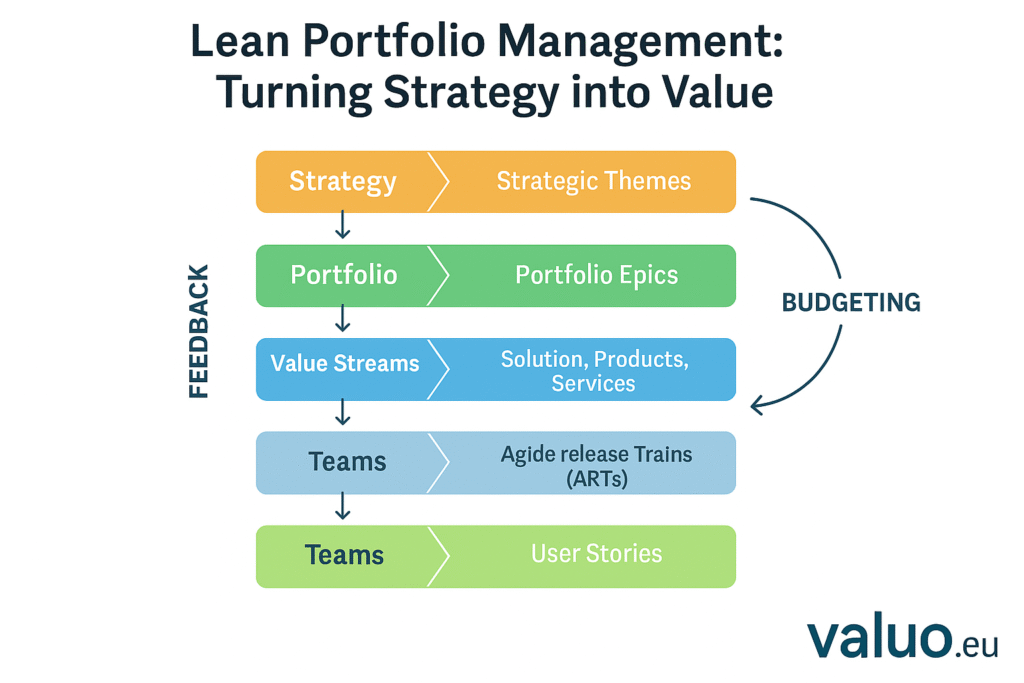
LPM is a modern approach that helps organizations connect business strategy with execution using Lean-Agile principles. Instead of managing projects in isolation, LPM organizes work around value streams, funds them dynamically, and continuously adapts based on feedback and market needs.
Unlike traditional portfolio management, which focuses on outputs and annual budgets, LPM focuses on:
Traditional methods often create bottlenecks and misalignment between business and technology. LPM solves this by:
At Valuo.eu, we integrate Enterprise Agility University frameworks and tools like:
With Lean Portfolio Management, organizations gain transparency, adaptability, and speed—ensuring that every euro and every sprint contributes to real business outcomes.

I am a highly experienced and results-driven Program Manager with over 25 years of expertise in digital transformations and software development. I specialize in leading comprehensive transformation programs, coordinating teams, and integrating complex enterprise systems.
Please sign in to leave a comment.
No comments yet. Be the first to comment!

